
RECORD HEAT · AUGUST 2026
Mallorca Just Recorded Its Hottest August Ever
As Mallorca's summers become harder on buildings, insulation is no longer only about winter efficiency. The roof and façade also determine how quickly heat enters a home – and how hard air conditioning has to work to remove it.
AUGUST 2026 · AEMET
A record month puts the building envelope in focus
AEMET reported that August 2026 was the warmest August in the Balearic Islands since the series began in 1961. The regional average temperature reached 28.3 °C, 2.7 °C above the reference average. Pollença reached 41.9 °C during the month.
Read the official AEMET climatological summary →

Air conditioning treats the heat. It does not stop it entering.
When roofs, walls, glazing and junctions allow large heat gains, cooling systems must continuously compensate. A more powerful air-conditioning unit can lower indoor temperature, but it does not correct an inefficient building envelope.
Before simply adding more cooling capacity, it is worth understanding where the property gains heat and which improvements make technical sense.
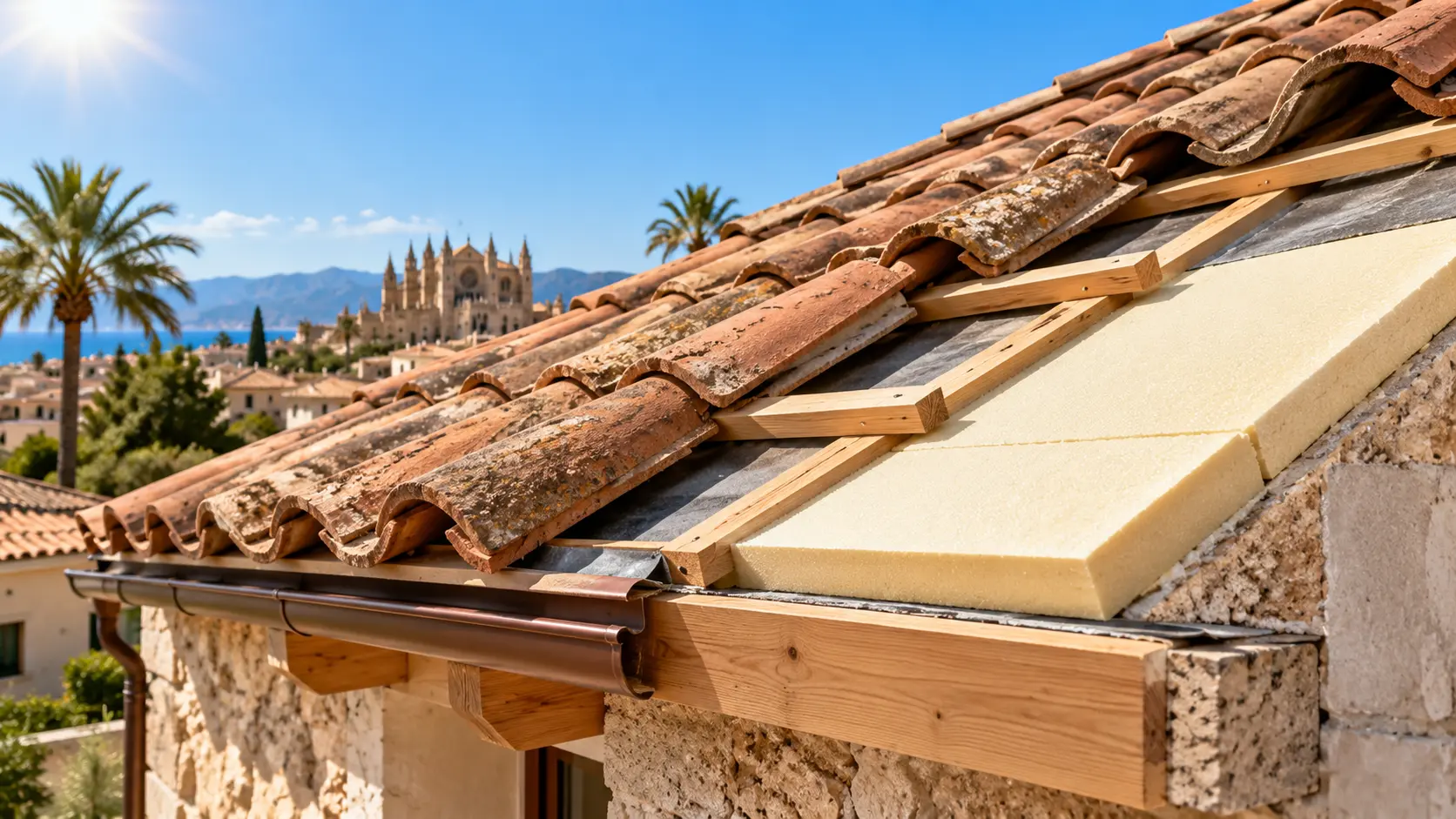
The roof is one of the first places to investigate
A roof receives intense solar exposure for hours. In poorly insulated properties, that heat can migrate toward the rooms below and continue affecting comfort after the outdoor temperature begins to fall.
When a traditional tiled roof is already due for renovation, insulation, airtightness, waterproofing and ventilation details should be considered as one coherent roof build-up rather than as separate interventions.
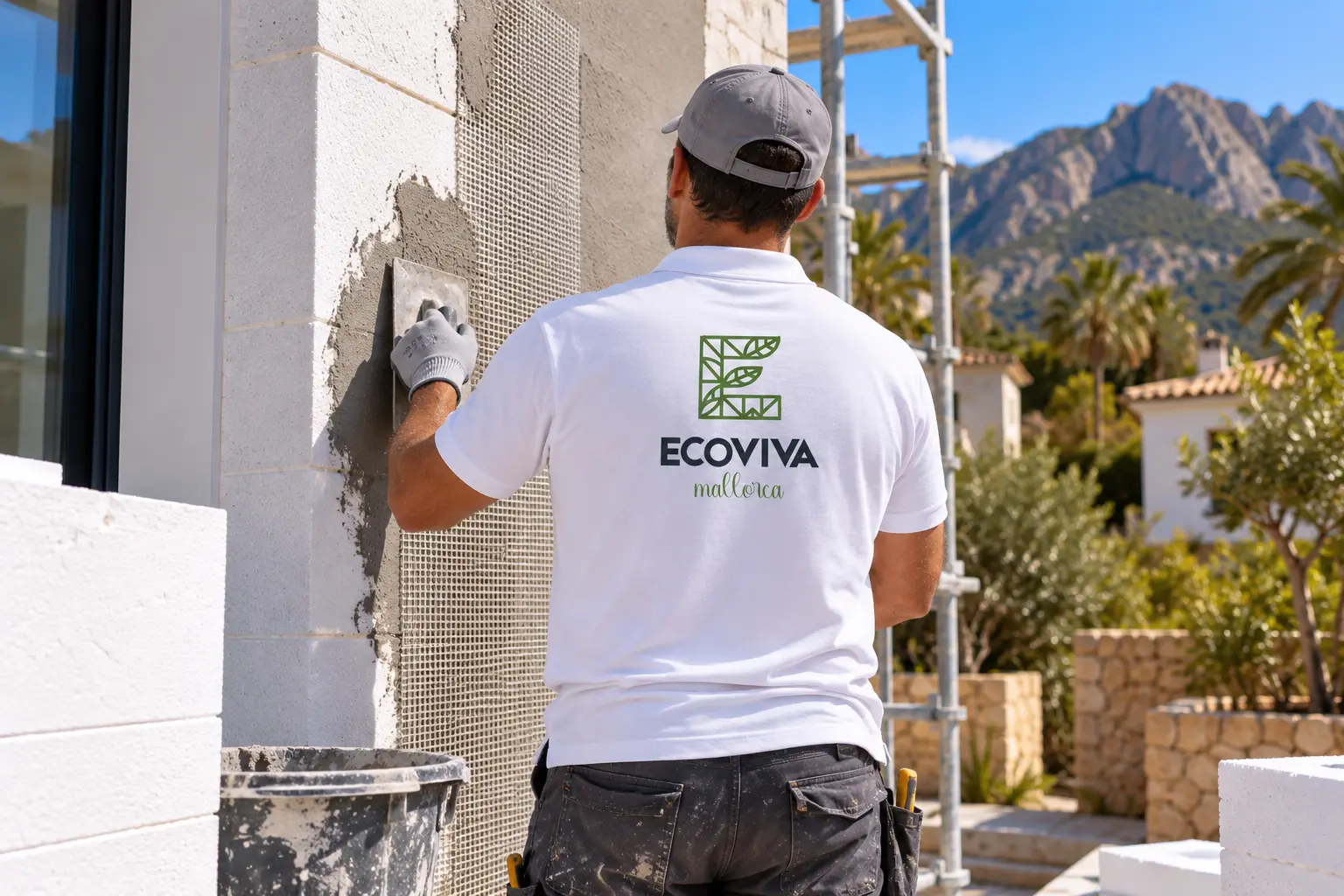
External insulation can reduce heat flow through exposed walls
ETICS/SATE adds a continuous insulation layer to the outside of the building. Correctly designed and installed, it can reduce thermal bridges and slow heat transfer through the external walls while also improving winter comfort.
It is not a universal solution for every property. Orientation, existing construction, moisture behaviour, façade condition and architectural constraints should be assessed first.
The strongest strategy is usually a combination
Summer comfort is rarely solved by one product. Depending on the property, the most effective renovation strategy may combine roof and façade insulation, solar control, efficient glazing, shading, controlled ventilation and correctly sized cooling. Solar PV can then help cover part of the electrical demand created by cooling.
The sequence matters: first understand the building, then reduce unnecessary heat gains, and finally size the active systems around the improved property.
- Roof insulation
- Façade insulation
- Efficient glazing
- External shading
- Controlled ventilation
- Correctly sized cooling
- Solar PV
TECHNICAL PROPERTY RENOVATION CHECK
Is your Mallorca property prepared for hotter summers?
EcoViva can assess the building envelope, visible risks and renovation priorities before you decide where to invest. The goal is a coherent plan – not isolated measures.
Request a technical property checkFROM TECHNICAL KNOWLEDGE TO EXECUTION
Planning this work for your property?
EcoViva translates the technical assessment into a coordinated renovation scope, suitable materials, specialist execution and quality control in Mallorca.
Explore the renovation service: Energy renovation in Mallorca →